
 1:29
VIDEO · Podcast strategy
VIDEO · Podcasting
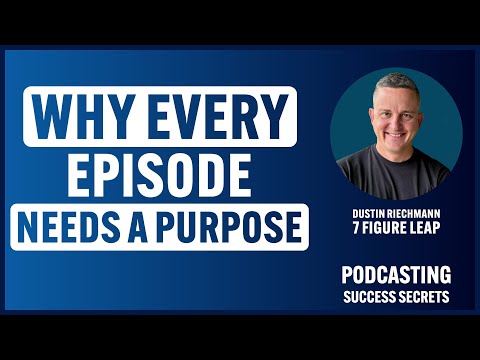
Discover the four distinct phases of podcast evolution as Dustin Reichmann shares his journey from launching a transactional interview show to building a strategic content distribution system. Learn how he shifted from…
The YouTube player loads only when you press play. Prefer YouTube? Watch there ↗
Discover the four distinct phases of podcast evolution as Dustin Reichmann shares his journey from launching a transactional interview show to building a strategic content distribution system. Learn how he shifted from interviewing only close contacts to landing aspirational guests like Ryan Deiss, why he challenged himself to create more solo content despite interviews being easier, and how adding a coaching series…
Do you feel like the show has evolved or do you think that there are maybe not distinct but certain stages that the show went through over those 100 plus episodes? >> Yeah, for sure. I I would say like the first phase I just thought this going to be an interview show and I'm kind of going to interview what I was describing like I'm going to interview ideal clients and then use this as a way to get people to buy our program. That was
like V1. We never actually recorded any episodes that way. We kind of kicked things off with a client and a coach of mine named Cassie and I had her interview me in the very first episode and it was all about like who am I deeply? What's the show really about? What's Seven Figure Elite Me? What's the
meaning behind this? And I think that sort of changed the tone for me. Like after that first episode, I'm like, this could be a really freaking cool show. Like I don't want it to be transactional. And I'd say phase two is when I started interviewing people in my close circle. So it was easy to be like,
"Hey, you want to come? You want to come? You want to come?" Like I'd already already had relationships with different people who I knew would want to do it. And that was good. It got my reps in and gave me a comfort level. I would say that Ryan Dice story was an inflection point where I realized I can go outside my own circle and invite people externally who I probably wouldn't have access to otherwise. So I
started to do a lot more of that. I would call that phase two. And then phase three, I would say, is when this like well, I'd say phase three is actually when I started doing more solo content. So that's when it was like, you know what, I like the interviews. They're frankly easier for me, but I
need to challenge myself and make at least like a third of our content solo thought leadership content versus just interviews. And I would say phase four, most recently, is when I added that coaching series. And then, you know, right now I'm sort of in a a new mindset of what's possible if we view this as the source of content that can be amplified in a lot of different channels. And I think the solo content
in particular is important for that. So I I think moving forward it's going to be more like 50/50 solo content versus guest episodes because I have so many more ideas for solo content now that I have a place that I intend to use it with different content distribution. Yeah, it seems like what you've sort of
done is figure out how the show can actually aid the business, how it can feed into the business. So many so many hosts just they just record content or talk to their friends or just hop on and and just talk because they know that they're supposed to record an episode, but I think you've been very intentional with the types of guests and the types of topics and the types of episodes that that you've been creating over the time.
>> Yeah, 100%. That's that was always the intent, but then I don't know like the application of that has really changed over time. And I think it's just I've gotten more clear and I understand more how this side of the mic works because again I had a lot of experience as a guest and most most of those sort of follow the same flow, right? And it's
like and I think I started off with this podcast that of my podcast trying to replicate that which is probably why the very first episode is actually me being interviewed by a guest host because I'm like well I know how to be a guest so let me first be a guest. But I think over time as I've matured and I feel
confident doing solo episodes and I know how to like pace things and have a good hook and like just be a better content creator from a solo perspective. more and more of that has found its way into the show. And like I said, when I'm doing guest interviews, I'm a little more selective about that. And there's a
specific purpose per interview type, right? Case study has its place. A coaching series has its place. The sort of the aspirational, you know, when I get a chance to interview someone who I would also pay $10,000 to have an hour with, that has a place. And so, yeah, I think I've just got a rhythm for one
thing, but also like I I know when I when we plan an episode what the purpose of that particular episode is versus just like, yeah, it's Tuesday, man. I got to record something. What can I scrape together? We don't really operate that way anymore. >> That was actually my next question,
which is, are there things that you did at the beginning that you don't do? And so I guess maybe you can share what that planning process looks like or is it, you know, or how deep that goes because I think that so many hosts can benefit from just being more intentional with their episode strategy.
>> Yeah, it's nothing fancy. It's just a Google doc basically I can access on my phone or on my computer. And that is primarily ideas for solo episodes. Like to me that's the harder work is coming up with original ideas to wrap on for 15 to 30 minutes by myself. So that's that part
of it. As far as other planning, you know, the guest things I sort of take them as they come. So there is no cadence to like hey every third one is a coaching series and every fourth one is an aspirational interview. It's just like as I get opportunities to invite people that I admire, they're going to get recorded at the first opportunity that match matches their schedule. I'm
actually I'm recording episode tomorrow as we speak with Cameron Herald who's he wrote vivid vision. He's like a really famous COO and like that just happened through a mutual introduction and I'm like here's my calendar. You find the first spot that works for you and we'll work around that because I think you know respecting people in that way is important. And then yeah, case studies
kind of come up naturally because we have a constant flow of people graduating our core program and then looking for opportunities to interview people there. So, you know, we publish weekly. It tends to work in batches where I'll I'll typically do if I'm going to do a solo episode, I almost always do at least two because it's like, well, if I'm going to get in the mindset and sit in this office and have the mic set up the right way, I might as well just knock out two. And I got
plenty of ideas. So I usually take those ideas transparently. I put them in chat GBT. It knows kind of my base of knowledge and I'm like here's what I want to cover like help me outline this. And I take a rough outline. I put it in another Google doc and that sort of becomes my very loosely defined teleprompter and that just becomes a bullet point summary of what I want to jam on. So that's kind of the process
and the flow. So, all guest interviews happen on Tuesdays and I try to do the solo episodes also on Tuesdays, usually on weeks when I don't have a guest booked and I'll spend like an hour and record two episodes at a time. That way we always are several weeks in advance on our publishing
1:29
VIDEO · Podcast strategy
 30:39
VIDEO · Podcast strategy
In this training, we break down and reveal why most podcasts fail to generate revenue. You’ll learn how to shift your content strategy from "solutions" to "problems" to instantly build trust, and discover the…
Let’s chat about utilizing content to increase your visibility and strengthen your industry connections.