post for for these things and I've spent much of the last years much of the last decade last several years trying to figure out how to make a successful podcast and these streams my podcast my content much of it is devoted to helping you create a successful show and uh I want to make sure that we're just that we're we're getting to all the places that we need to get LinkedIn has been a little funky today and so sometimes it seems that things take a little while to get through so bear with us as we try and make sure that we are in all of the appropriate places but if you are here and if you are catching this I would love to know where you were tuning in from uh and if you have a podcast would love to know where your podcast uh what your podcast is and um you know what you just throw in your show down there uh let me know what it is and I'll go check it out and um we can maybe talk about it here on the live stream so
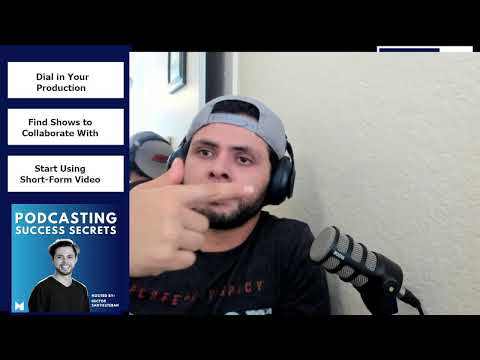
looks like we're going to get up looks like LinkedIn is is going to let us uh playball today and so you can see here from my my handy dandy little little thing that keeps us on track I've got to figure out where this goes so like I don't know there it is okay so here right here okay the first thing that we're going to talk about there right you can see is uh is getting your production dialed in and getting your production uh nailed down because that's that's probably the first step if we can save you some time if we can save you some money if we can get things really dialed in there on your in your production I think that you're going to be uh in a much better place to do all of the other things but if your production and you're editing and all that stuff is taking a lot of time it's going to be really challenging for you to really do anything else when it comes to promotion or collaborations or any of
these other things so uh production is is huge I'm going to check it doesn't look like uh the stream is coming through very well I don't see it on my end if you guys are catching this and you guys can can hear me okay uh would love to know because LinkedIn is is being funky and um I don't know if if you can hear me or see me correctly uh at all so looks like it though I'm pulling it up on my phone and so if you guys have questions throw those down there and and we'll get to them so why why do I think that production is so important and and I think that it's it's probably the foundation for so many podcasters because it's often times the thing that people don't don't know right at least in the in the space that I come in from people they're oftentimes their authors they speakers their coaches their Consultants their business owners they they do something else and they see the podcast as a way to be able to
impact and and and reach more people you know I think about you know we had one person in our boot camp and she was somebody who we actually I just interviewed her on our on the podcast on podcasting success Secrets which you can see right here go search that on wherever you find your your podcast podcast but we just interviewed her her name is Lorraine Connell and Lorraine was a member of our boot camp for podcast AMA and what was I I we actually talk about this on the show but when she first started she was spending up to eight hours per episode of just editing not not including the recording not including the research not including the Outreach not including the promotion not including any of this other stuff it was just the editing and so we went in and we dove into some of the things that she she was doing we figured out that there were some easy adjustments that she can make in her process that took her down
from 8 hours of editing to like 1 hour of editing now when you go from 8 to 1 you could do a couple of things the first is you could have seven hours of your life back which is fantastic the other side of it is that now you've got seven or or however many hours of left over to be able to to devote to promotion to devote to um collaboration to devote to outreach to social media to video to all these other things so dialing in your production process can be really really uh really helpful uh okay so sorry I some weird things popping up on my screen if you guys are here though and you guys are catching this let me know um if you guys have any questions I'm going to check in and see if I can find any of these uh if there's any questions that are coming in here uh as well so Katrina Izzy thanks for for checking in and letting me know that you can hear me I appreciate you guys uh you guys being here so let's um
one of the things that that I found helpful in in my world is checklist because we right now we produce about 20 different shows in our uh for our production company and so on average we're putting out and Publishing anywhere between 20 on a light week to 20 to 30 episodes per week and in production I mean there's anywhere between 30 to 40 episodes in production at any given time and so when you have 30 30 to 40 episodes going at one time and then you also have what we found to be like 30 to 40 steps for each of the episodes that can be really really challenging that can be really really hard for um for someone to keep up and keep all of that in their head I have another friend another dear friend who um you know has a really successful podcast and what's really interesting is that for as many episodes as they've done you know over a 100 episodes tens of thousands of downloads you know monetize the whole
thing and what's really interesting is that they keep all of their stuff in still in a in a Google Drive and it's all just like in a Google Drive and it's like in a Google Dock and it's all it's all kind of there but if anyone were to be able to like if anyone needed to go in and find anything or if heaven forbid something happened to him and he couldn't edit an episode or he wanted to like bring somebody in and and start to delegate and Outsource this sort of stuff then it's going to be really challenging because he's the only one who knows where to look and so what we found is really helpful is to be able to have some sort of checklist and so I'm going to pull up our uh our checklist here and what we found is this one is the simple one we've got about 25 different steps here and let's see if let me pull that up okay so now you guys should be able to see that here so this is our our episode template and we run
everything out of notion all of our uh all of our production is really done with notion is kind of our our production company's brain if you will it really is our operating system and it kind of keep helps to keep everything organized and intact here and so you can see with all of the episodes there's a few things that we're going to keep track of right all things that what we want to do is we want to make it easy for you to be able to just copy and paste things when you publish it we don't want you to have to be able to rewrite things we don't want you have to go looking for stuff we don't want things to be hard to find we want you to be able to copy and paste drag and drop make it really easy for you to be able to publish it because at this point like you know the there's so many steps so if we make it complicated for ourselves then it's just going to take longer and because there are so many steps if each
of the steps just gets a little more complicated or just as a little more complicated than it needs to be then it's going to take way more time it has to and so you can see here that what we try and have is we have the title uh if there's an episode number in there do we have the episode number that's helpful for keeping track internally but then also you can just paste that right into the you know where it says for the episode number in your hosting provider or for Apple whatever it is uh we've got a couple of spots for the URLs mostly for recordings the final one um if there's an artwork you know for for pictures and then any notes the this just are are the kind of the the the key um elements if you will of the episode but a lot of these things are are kind of static and isn't really the process in which you're going to kind of follow but that's down here and so let's get into this process and you
can see here we've got a couple of parts to our process one two three four five six parts right we've got pre-planning recording content editing sound editing publishing and promotion and and what I'll what I'll mention to you and the challenge that that podcasters have is that you have to do this with each episode and a lot of times podcasters are releasing every single week and so it can it can become kind of a grind to have to do this week in and week out but what I will share with you is that's the value of having you know someone like us that's the value that we as a production company are you know amplify media that we bring a lot of our our our clients you know they do some of this pre-planning they do the recording and then we do the content editing we do the sound editing the publishing the promotion like all the rest of that stuff is kind of handled by us so that way all they have to focus on is just
doing a really good recording which frankly is what most most entertainment or educational Talent has done for most of the of of History right and what I mean by that is that you know Oprah Winfrey she's a bad example because she got into production she was a producer and such but the people that you hear on the radio which are the closest things to a podcaster most of the time they all they had to do was worry about you know what was coming out of the uh you know out of the speakers they didn't have to worry about selling ad spots they didn't have to worry about going in and editing it later or how it got onto the airwaves or whatever it is all they had to do was go in and and create a good show and a lot of people like to do that and so by having this sort of process what you're able to do is you're able to say at least you know if you're going to focus on doing the recording and you as the
host you still want to maintain some sort of the easiest word I would say is like control or or really you want to still have your creative input into it well then I what I would say is to make sure that you have a process that your people can follow and uh and this makes that possible so Dave Happy New Year to you as well and um if there's anyone else out there who's catching this uh drop your um in the comments let me know if you've got a show or where you're tuning in from and um we can we can chat about it and maybe I can offer some some insights for you all right so let's go into each of these sections because I think it might be helpful for us to touch about him about about all of them so the first part of the podcast production process is the plea is the pre-planning process and this is before anything ever gets recorded and there's a couple of of things that we think about um that you want to have dialed in
the first is is your topic and or guest are you if you're an interview show who are you going to be interviewing if you're not an interview show what are you going to be talking about and there's a whole process to figuring out who are the right guess and what are the right topics to talk about but you want to we're not we're going to save that for a different video but you want to make sure that that part is dialed in I know that there are shows that just show up and they're like we're just going to show up and we're going to see what happens and we're going to figure out what we talk about then I think that can work if you're really good you can kind of capture lightning in a bottle if you've got some really great chemistry as a host or with your co-host it can be entertaining but I found more times than not it's much more helpful and it's much better to have an agenda or topic and not use it than to need one and not have
it because you could always show up you could always get to the recording start the recording and then three minutes in one minute in however long into the process even before you hit the recording button realize that there's a better topic to record about and record about that but at least you've got the the it to fall back on so you can either the topic to fall back on so you can either go back later and record that one or you can save it for later or um you can have it for extra I mean but but what you don't want to do is you don't want to sit down get into the recording and 3 minutes into it be like dang we don't have anything to talk about and then trying to figure it out then because that is either going to be a really bad episode if you end up publishing it or you're going to end up spending a lot of time doing some research going on and Googling figuring it out and then it still might not be a
great episode anyways so it's always better to have some sort of plan even if that plan is loose and even if that plan is the same thing every time you might say well we're going to show up we're going to talk about this kind of thing we're going to talk about the things that that are bothering us then we're going to talk about the things that we're excited about and then we're going to talk about the things that um you know we bought recently I don't know but at least you know that you have a format you've got to plan and those things are changing every single time but at least you know when you sit down you have somewhere to go so thinking about who it is you're talking to or what it is you're talking about is really really helpful the second thing you want to make sure that is is is planned and in place is a recording time I think that maybe this is um maybe this is let me tell you about one of the
podcasts that that I think was one of the the biggest failures and not because it didn't get a lot of downloads and not because it didn't have sponsors and not because you know it ended up fading or whatever like the only reason that I would call it a failure is because it didn't it didn't live up to its its potential it it it it really it had it had some real momentum you know it started out and and was about you know 100 episodes in couple about a year and a half couple years in and was really starting to hit their stride but then all of a sudden the co-hosts they stopped recording consistently they stopped recording at all and they would sometimes go months without recording anything and it would be because they would they were traveling a lot and they had their own business and they and they had their reasons but the challenge is is that they didn't have a consistent recording time that they were committed to and
they kept putting it off and they kept putting it off and it kept get putting getting put off and what ended up happening was was that those those weeks turned into months and those months turned into you know turned into some real stretches of time where could we you know as a production team could we go back and find old episodes and could we find talks or workshops or too much that anything was really a miss or that anything was off except you're like wow these are a lot of different kinds of episodes It's not like the normal sort of episode where the co-hosts hop into the studio and and record but what happened was is that as that persisted and as they continued to be inconsistent with their recordings the numbers they were growing at before it you know before we had this kind of drought and then we had this sort of this this moment where we didn't get any fresh recordings and the numbers started
to Plateau so we didn't really see like we weren't going down quite yet but we saw this Plateau where we weren't growing anymore maybe we were getting new listeners and some were churning or you know maybe just we were keeping some of the ones what whatever it may be you can't really tell with podcast but we we were definitely weren't growing and eventually it stretched out to the point where we started losing listeners and and the download started going down and and what was interesting is that all it it took was a reinvigoration and a recommitment to recording consistently to see those numbers come back up because all of a sudden the listeners started getting what they were used to they started getting what they were expecting the the recordings were were good recordings again they were actually podcast episodes that were meant and made to be podcasts the challenge was is that that that consistency didn't last though
right it came in BS bur and it came in spurts and and uh you know unfortunately that led to sort of I don't want to say the demise or the downfall of it but it was really this this podcast Powerhouse that had sponsors coming out the the wazoo looking to work with them to being kind of just a you know an okay podcast and and The Challenge from our perspective you know as a production company and and from doing the production and the editing side is like we can only lead the horse to water right we can only do so much to actually get people to record and so that's why we've found that having topics and guests are helpful having dates scheduled even if it's like we record on the second Monday of every month or we record on the first and third Wednesdays or we record every Friday or we record once a month on the second Sunday like and you just knock it all out whatever it is having some sort of consistent regular
reoccurring committed schedule a really really really long way so all that to say that that's part of our pre-planning process now now one other part that I I haven't mentioned here which I will I'll take some time to get into is our Our Guest prep and I think that that's something that you can go that can go a really long way for a lot of um for a lot of podcasters is to prep their um to prep their guests now we like to prep them in a in a couple of ways the first way that we like to prep them is obviously with the the time and the the setup um you know where when are going they going to be recording where are they going to be recording on what do they need to do like like the setup the website the link all that sort of stuff we try and handle so that they can um you know check all those boxes they can have all those questions answered and then at least they can show up in a you know in a prepared way however
that's not the only thing that they need to be prepared at the second thing that they need to be prepared at is they need to be prepared when it comes comes to their the content that they're going to be you know delivering a lot of guests want like questions and I've I this is tough because I don't come into my interview with very many like questions that I'm I know I'm going to ask I have some ideas about what I'd like to talk about and I have I have a a structure to the conversation and a flow through which I want I want to take it but I don't have any specific sort of questions like I'm going to ask you like there are are some podcast hosts where they will have their 10 questions and that's all they'll do is they'll just read their questions like straight out of a book like they're narrating something on Audible and I think that's really boring I think it's really dry I don't think the listeners enjoy that nor
do I think the guest enjoys that and so for me I'm really looking for both having you know combining my my sense of structure and how I want the flow of the conversation and what I think the listeners are looking to get out of out of it or what they might be looking to get out of it and then also paying attention to what is the what are they putting down what are they talking about what are they what what are some interesting insights or tidbits that they're mentioning that I could go deeper on and so a lot of times that's not going to come from specific questions however what it does H what does help is to give them some thought joggers or some ideas or topics or giving them a little bit about the structure of the show or the flow that you like to take them through anything that can help them to go okay I can I can do that you know just a little bit of homework helps them to prepare and once again going back to the same thing
that we talked about for the topics for even if you're just doing it with the co-host even if they don't use any of that stuff they're more prepared if they want to be and they're going to be some that don't want to be and they don't they don't read their emails and they just show up and and they're better for that too but at least for the ones what I've what I've seen and heard is that more people want that than not and and also more most people won't they won't ask right most people are not going to ask some will but most won't and so you may not know if you're not preparing them enough you just you know you'll see a perhaps a subpar you know sort of performance in your um in your interviews so that's a little about pre-planning let me take a second here on my phone the video is black and I don't know why it's just so strange YouTube or LinkedIn can't seem to get their their shiz knit together but um if you guys
have any questions throw those down there what I'm trying to uh to walk through is some of the the key components of um success for podcasts in uh in 2024 um a lot of things are changing a lot of things are the same but most importantly dialing in your production process is going to be something that is not going to go away so let me see if I can go through a little bit quicker on uh on some of these other parts cuz it looks like we've been we've been going for a little while huh 20 minutes here so if you guys are catching this wherever you're catching this this is being multi streamed on all the different places LinkedIn Facebook YouTube X formerly known as Twitter so if you guys are not following me on any of those other platforms come and uh come and find me there all right so the next section is recording recording is um you know I guess when you well actually when I say that let me say that
I've done hundreds of recordings literally hundreds of recordings and even to this day it's still a crapshoot of whether or not it's going to work like like the honest the honest to God truth is that I there are there are like if we were to measure my like success rate with recordings and by success rate I mean like everything went smoothly right like everything went perfectly when it comes to recording I would say my success rate is probably like in the 65 70% like I am and I've done hundreds of recordings and we're we have a production company where we teach people and and help them like do this stuff and we like instruct them on how to do it so with all that being said there is so much that can go wrong when it comes to recording that the more you can think through and the better prepared you can be for your recording process process the the better off you're going to be right so what is that what do I mean by
that well I think there's a few parts and a few components to the recording process the first is your your equipment right so your your Tech and you'll see here like I love my road my road mic you know it's a pod mic it's not their most expensive mic um in fact I think their their newest one is a USB uh plugin that goes for like it's like a 100 bucks or maybe it's 200 bucks something like that but I love the Pod mic and it's simple now it does require some actually the new ones don't this one requires uh what we call an audio interface and that's just basically so I can take the microphone and then the microphone doesn't go straight into the computer at least this one doesn't the new ones do so if you go and get one um the new ones go straight into the computer but I've had this for a number of years and so I needed what's called an audio interface so I can go from the microphone I plug it into the audio interface audio
interface plugs right into my computer now some other people they use a like a you see a lot of people call a roadter pro that's an audio interface I think those are great I just do most of my um recordings virtually and so it's not as necessary roadter Pros are great if you're recording stuff in person and they're even great if you start to do some streaming uh things as well so so road so that's that's what we're talking about there the other part of it the other component is is your is your camera and your video so video is obviously a growing uh is is continuing to grow in importance when it comes to podcast uh and with that you know you've got your lighting and your your different sorts of of things that go along with your video and your camera yeah and then it gets deeper right you know some people talk about teleprompters and monitors and all those sorts of things and of course you can go
down that rabbit hole but but you've got your equipment that you've got to nail down the second part that you've got to nail down is you've got a nail down your your recording software and I this is a question that I I kind of hate because a lot of people ask me like what do you recommend on my recording software and it's like gez I don't have a good answer for you because there's no perfect solution out there and so the challenge is is that any recommendation is going to be like like I always give a recommendation like anytime I give a recommendation I always give it along with a warning that like nothing is perfect and like we we don't we haven't found the perfect one and there's there's different things different tools and platforms that work kind of better for different people and some people have different opinions about which ones are better but but honestly it's I don't want to say it's a
crapshoot because that's not really what I mean but it's kind of a pick them sort of a thing where like pick it and and if you like it and you have I don't want to say like good luck with it but sometimes luck seems to play like a like a a factor in it but if you you if like those things fall into line then then then you're good to go you know and the ones that I that I think of and none of we're not sponsored by any of them but I'll I'll kind of pull some of them up that that we like so we personally on um for our shows we record on uh on Zen caster and zenc Caster is a uh is a great platform we like them because um they have unlimited recordings and so with the amount of recordings that our shows are doing um we really like Zen caster for for that the other ones are that we use a lot and and find ourselves I don't know if recommending necessarily is the word that I want to use uh but but is Riverside that's
another one that that we found works works uh well and that a lot of our clients will use as well um but similar same thing we've had people have weird funky issues with Zen Caster where for some whatever reason their mic doesn't connect their camera doesn't connect it's they just can't get in and then we've had similarly people have issues with Riverside I've had issues with both so it's like you know there's no perfect component this is one um and then the other one because we use um because we use the script uh squadcast is the uh is the other one and um you know we don't use them personally but I know a lot of uh I have a lot of friends that that use them and because you get access to it along with a descript um account it it makes real a ton of sense so those are are the three recording platforms that that we recommend and and or that we I don't know maybe suggest is a is a different word suggest looking into and
what I would say is to like a lot of them have free trials try it out see if it's compatible with your your computer your Tech your sort of stuff uh and then if it is fantastic and if you know most of these are are pretty reasonable in their pricing um so so usually that's not the hangup sometimes you might have some issues about if you are recording a lot there might be some some levels or tiers in which you you kind of you know want to look into but generally those three you'll be really safe with if you're going going to be recording remotely and I don't know that that that's necessarily the the best practice heading into 2024 but it is um where a lot of people are at and and obviously if that's what you're going to be doing then um then you'll need somewhere to record and then have your guests record as well all right let's um where we at here how we doing on on time y'all and if uh if you guys are here and catching this I
I appreciate your your time and your support um your love your attention if you guys have any specific questions throw those down there and I will uh try and answer them as they go and and if you've got a podcast or you're thinking about starting one drop the uh the name of it as well um would love to to know that all right we're we're just on the um we're just in the in the production side of it and hopefully this is this this is valuable for you guys I didn't anticipate me talking for so long about just these sorts of segments cuz we're we're just on the we're now moving into the content editing section because once once you record it that is like that is where a lot of people I think think the the journey ends but for for most podcasters that's where the journey actually begins right for most podcasters the journey actually begins here because this is where most of the work happens the editing the promotion
of it the publishing the collaboration all that sort of stuff um so that's uh that's where we're here let's see it says I he this said that they lost me looks like I'm back a little bit if you guys are here and catching this let me know um because the comments seem to be coming in a little late but okay so I'm going to take this next part of the process and we're going to we're going to kind of Chunk this to see if we can get out of here in a in a reasonable amount of time because this next part is uh is the the bulk of the editing process and there's two parts to the editing process the first is what we call content editing and the second is what we call sound editing sound design even but I would be hesitant to call it sound design because I might offend some of my fellow audio and I wouldn't even call them fellow some some expert audio Engineers who are actually doing real sound design by when
we say sound design we mean more of like sound cleanup and like sound uh treatment is maybe even the better way to put it so let's let's just change that here because I do think that it's important to to realize that we're we're talking about some different things when we say content editing what we're talking about is we're going through it and we are making the conversation fit to to hear and that could be a number of things that we could be doing we could be removing filler words we could be removing false starts we might even be restructuring the the conversation there was a an interview that I was editing just the other day and it was a great interview but right in the middle The Host asked a question like so tell me how you got started with this whole thing and I was like what that's like kind of a weird time to ask that question it was already like you know 15 minutes into a 30 minute interview and I was like this
this is kind of a weird spot and so what I did was is I took that question and I put it moved it up towards closer towards the beginning of the the interview and it was really only like shifting it like maybe one or two questions up but and so that question came in at the like the six or seven minute Mark not the 15minute mark and so to The Listener they almost it was probably almost in unnoticeable right like like I don't even know if the rest of our team noticed that I made kind of that that content decision but but it didn't really at least for me when I'm looking at it it didn't make sense to ask that question in the middle of it I was like this is a perfect question to go right at the beginning and so that's something that we're doing is we're actually kind of restructuring stuff there's also times where people will ramble and you'll have and myself included right where I I'm a rambler and
so I've got to find ways to bring myself back but there are times where the guest goes off on a tangent tells a story that maybe shouldn't be kept in there's moments where our hosts will tell jokes that should not be told in public you know that should not be be published and and heard AC you know across the world world and so all those sorts of things that we're pulling out of of the recording to make it either a clear you know to make it sound clearer or to be able to be understood better for it to flow better sometimes we're even doing that be for for time purposes you know like if if you have if you have a really long interview and you've got to fit it into you know some sort of recognizable amount right all of a sudden you know for the most time you do 50 minute interviews and all of a sudden you've got this hour and 20 minute interview it's like you might look at that and go hey is this is this two episodes where
we can put you know two 45s or is there is there some fluff in here or is there some stuff in here that that really doesn't isn't really necessary for the context of this conversation so that's the first process is putting that content editing you know putting that part of the conversation that part of the episode together the second part is what we call here is Sound Treatment and these are things like removing the background noise removing the echo you know making it sound clear and and I've got to admit even as I'm talking about this this is the part that I am most ignorant in the least educated and the least informed in like I am a i at first I was a a digital marketer and then I was a Content marketer and then I was a podcast marketer and then I sort of back my way into podcast production but I have never been a sound editor or a sound engineer by any stretch of the imagination and so I look and I defer to
my friends our our production team is headed up by Kevin Cook who has the the Jury Room podcast he's a fantastic sound guy another good sound gu is David SC um tons of Great Sound guys out there not me but I do know that what we're looking to do is we're looking to you know you can see like my marketer way of putting it it's like we're trying to make it sound crisper we're trying to make it sound like The Listener is there with the the there in the conversation with the the speaker and or with the host and the guest or whoever the speakers are and so a lot of times that is removing that background tiny kind of noise that is you know pulling out some of the highs and the lows uh on voices to make you know the the crisp sound um come through sometimes that is removing things like breaths and uh you know word graps and all those sorts of things you know if if sound editing though and Sound Engineering is something that you guys
are interested in I'm going to bring someone on and we're going to talk about the that here or I'll I'll do an interview and we'll play some clips here on the show but um it's an important part of the process because if you don't do it it you will lose listeners like it's just it's just an unfortunate fact where if you don't have high quality sounding audio you're not going to retain listeners now is there some value to getting started and just like getting going and it's like yeah absolutely because you're always going to look back and kind of cringe at your at your audio for your first few episodes anyways so like whatever that starting point is just get started but then also know that it is worth having a good microphone or recording in a good room or a closet or something like that if you have a a mic that's not great and it is also worth putting in some time into editing I know that there are some people who are like
I don't edit it I just throw it up there and it's like okay but but have you ever actually listened to to your show because a lot of times when that happens people they just throw it up and they don't realize that their show is like actually unlistenable to like it's like it's actually too painful to listen like the the sound like there are times where the sound is just too painful or someone's smacking their lips or there's a click or like there I would I could not encourage you more to listen to your your show in all sorts of capacities and varieties listen to it on different speakers listen to it on in your car in a car on headphones on your phone on a Google home on a on an Amazon Alexa um once it's published before it's published like all these sorts of things are going to help to show you and not only show you but like however to that you're going to be able to hear things you wouldn't normally hear and it's a
it's a really interesting thing like the like sound and and audio stuff is just it's a weird we're dealing with a lot of weird things and and what I mean by that is like your ear might be like funky like you might have weird like and I don't mean weird but like you there might be something off in your ear what happens to a lot of podcast editors is they have like something and I don't know I don't I don't remember the exact term but it's something to the effect of like dead ear or it's something to the effect of where if you have headphones on and you're listening to like loudish audio or audio intensely too much where your ear starts becoming like less attuned to sounds in the same way that if you were staring at a screen or staring at something intently all day like your eyes start to get a little less clear the same sort of thing happens to your ears so you may not even realize that you're missing
this sort of sound or like something may not be coming like the point is is that when you listen to it in these different capacities those starts sort of things sorts of things start to emerge or sometimes we're just so deep in a creative project like we're just so focused and intent on our on our on the project that that we just we missed stuff I can't tell you how many times it's just like oh I I I'd missed that I don't even know how I didn't see that or I didn't hear that or like how did I how did I not catch that and it's just because we're we're so into it that we don't have that outside perspective so give yourself that uh that opportunity um as well all right let's keep rolling here shall we and I got to thank all of the people that have tuned in um live here John great to see you Dave Katrina Izzy if you guys are catching this appreciate you let me know where you're tuning in from or if you've
got a show let me know what what show what the name of your show is uh would appreciate and love that maybe we'll give some Live reviews here on a stream okay so we talked about Sound Treatment so content editing Sound Treatment in that process is obviously the I don't want to say Obviously but in that process is the assembly so adding in music add adding in transitions adding in bumpers putting it together and kind of structuring it uh you know that would include all that part of the process right that's that's what you want to do and then you know one of the thing that's on here as part of the checklist is making sure that the gain is uh is is adjusted what one thing that you that absolutely drives me crazy and what and and you'll notice it if you're if you're driving in like a car or listening in a car is there are podcasts where the audio goes up and down and up and down and the the host might be really loud and then the
guest is really Fain or vice versa and so I find myself having to turn up the volume and then turn down the volume and turn it up and turn it down turn it up and turn it down and it's like once again it's unlistenable because there's it's just not practical for me to be adjusting the radio that much you know like with podcast especially we put on our podcast and then and then we we like we want to leave it like today I put on a podcast before I went to the gym and I let it run for an hour it was like a two-hour conversation then I caught an hour and 15 minutes of I did not touch it once I think there was one time I paused it cuz it got like a really intense set and I I didn't want to miss anything but I just I hit my I literally I just pushed the the the button on my headphones I paused it pushed it again to start it again and that was it and so if I'm going to have to constantly be going if I had to
listen to that conversation and I had to be constantly be going in and adjusting the volume while I'm working out I'm going to listen to something else and so the gain of your episodes is so so important uh to make sure that it's it's coming out in a way that also isn't like too low or too high you know there are times where I've listened to shows where it's not that I have to go up and down and up and down but it's like it's so so low and so faint that in my car I have to like blast I have to have it on full blast and if I don't have like huge subwoofers or if I don't want to engage like th those those parts of things I can't hear it so all that is you know is just important and why we build it into these checklists all right I don't think we're going to get through the rest of the points here guys this is this has been a a good stream just talking about production so we'll we'll probably have to have a round two
or uh maybe even three to cover all the stuff uh but once again if you guys got any specific questions let me know um and we'll we'll cover those here the next part of the process is publishing and I thought that it was important to have this be an entire an entire section for a few reasons the first is that there are a lot of steps to it and once you've published a few episodes usually it's usually not that big of a deal you're like all right yeah I got to put in a title I got to put in a description what's the episode number upload the art when am I scheduling it any you know a couple of other things click click click boom at first it's like oh Jesus this is a lot I've got to put on a lot of like this is a lot of things and so that's why we do have a checklist here but after while it is it's generally the same sorts of things and so I find that it's helpful to have this section be like you know
checklist out on its own because it's a very easy part to or it's a very good candidate to delegate and Outsource first you may not want to Outsource your editing you may like to do a lot of that that may be too expensive but you could probably have someone do the publishing for you for frankly if I'm being honest a few dollars USD per episode right right like you probably could find someone to do it for a few bucks and if that saves you those few bucks save you a half an hour an hour is it worth it I don't know maybe maybe not but but but it is a really good candidate to um to Outsource and to delegate and there are people who are very very capable or very diligent very reliable who will be able to do something like that for you so publishing there's a few part to it right I guess let me let me bring back here let's bring back the the list here so when we talk about publishing the one of the key parts of
publishing are show notes and episode titles and they're important because that's what's going to drive your discoverability that's what's going to drive your search that's what's going to to drive people finding you the most is having good episode titles that are easy to read that have good keywords that are clear in terms of what they're about and then you have good show notes or episode descriptions or summaries that similarly are easy to read have keywords timestamp chapters right uh all the links and such all those things for for search discoverability and then also for for conversion and and to kind of turn it into you know to actually capture that attention and turn them into social media followers people on your email list leads clients customers all that's important to have uh you know that's going to come through a lot of times people listening to the episode and then checking the show notes for the links on
where to click so so having some sort of process for creating your show notes is uh is something that's really valuable now by the way I haven't mentioned it I should mention this if you guys want this uh this template here right this checklist just comment checklist and I will uh I'll get this to you um I'll just send this to you we have a it's a free download you can just copy and and and and and download it um you can use it in notion or you can you know export this and and use this wherever print it out even use old school pen and paper all right um to publishing and then the last thing that I would say is that that might be a minor note to to mention on here is publish early publish early in the day on whatever day that you publish and it might even be worth it where if you you've got an episode ready later in the day it might even be worth it to publish the following day early in the morning and the reason is
that a lot of times the way that most podcast apps download is they download um synchronously right or or or kind of by by by the time and by by what's the word I'm looking for recency is the word that I'm looking for and so what that means is that if you publish in the middle of the the night um you're going to end up and like just the way that it positions you you're going to end up getting lost behind all the people you chances are most people they refresh their podcast feeds in the morning or in the early afternoon or wherever they whenever they're going to kind of head out to do their thing that they're going to be listening to their podcast on but usually by the night you've kind of like most of the people at least when we're talking percentages right have passed because I mean just just it's later in the day so so like just that's already happened right you've already missed all the people who listen to listen to
podcast in the morning and afternoon but then so but then you're you're still going to be behind all the people who publish in the morning on the next day so when those people come back and refresh their feed you're stuck behind those people who publish in the morning and so by publishing at night it kind of puts you in this weird spot now I know that there probably going to be people who come on here and argue with me and say well I publish at 8:00 P.M all the time and you know we never have any issues and it's like for sure like there's going to be e exceptions to this what I would say is generally we found that our numbers are better when we Post in the morning and early in the morning than later and depending on where you're living you know I live on the west coast of the US so by the time I wake up at like 5 or 600 a.m. it's already 8:00 on
just even on the other side of the of of the country and then in the UK it's already you know the afternoon so we like to post like 3:30 Eastern Time right now that's like even sometimes it's like 12:30 Pacific but 3:30 Eastern time that's right before the early birds get up on the east coast and then you're able to catch all the people as they're kind of waking up so that's kind of another minor note when it comes to the publishing process that uh that might be helpful all right fam how we doing here how we doing here pod fam I appreciate y'all being here and and it's cool to uh to see some familiar faces and also some new ones if you guys have any questions here we're going to come up we're coming up on the last section at least for today because um I had three topics that I wanted to get into is over over there we go over here but we just got into the first one because I tend to ramble a little more
than it seems is ideal perhaps but I think that we covered some good stuff so um we'll come back and we'll we'll talk about the rest of the topics here but if you guys have any specific things that you want to get into today let me know and um let's uh let's get into it now this last section on the checklist here is promotion and promotion is it's vital for podcasters because if you don't promote your podcast it's very unlikely that anyone is going to find it and it's a harsh and unfortunate truth but it is sort of the the truth and the reason is and it's getting better and there are places like YouTube that are making it easier to be to for podcast to be found and Spotify is getting better with their sort of discoverability thing but generally for the longest time podcast platforms like like an apple or like a Spotify we're doing almost nothing to help your podcast get found it was just the nature of of kind
of the game you know and that's why YouTube is a really really unique sort of opportunity for podcasters and of course there's going to be people who go well Hector if it's on YouTube it's not a podcast and it's like all right well we can have that kind of debate you know later or whatever it is but one thing that YouTube does do a really good job of is figuring out who likes what sort of content and then going and serving them that content YouTube is a great platform because most of the stuff that I watch on YouTube there are there are some exceptions but most of the stuff that I I watch I don't subscribe to the Creator I don't subscribe to the channel I just see it on the suggested feed I just see it on the on the home screen and I go well that looks like a topic I'm interested in and I click it and I watch it and I'm like wow I'm I I and what is happening along the way is YouTube is starting to understand the sort of stuff
that I like and it starts to serve me up more of that and so if we can kind of get in that River and we can start to put out our stuff and YouTube can start to identify what sort of people like our stuff they're actually going to if our content is good and if our content is enjoyable and if people are finding it and enjoying it and sticking around and all the sort of things that kind of YouTube wants if now now granted it's a different kind of game that we're playing than podcast right with podcast it used to be if you could get someone to download it boom it counted and like that was what that was the metric that you could kind of charge by with YouTube That's not the game that you're playing you're trying to get them to stick around and kind of continue to to really just to continue to stick around with podcast specifically like you know RSS feeds and downloads and such and cpms it was a little different
because it was really hard to measure whether or not someone was actually you know actually heard your ad with YouTube they have a lot more of that data and such so there are all those sorts of things right but all all that to say that YouTube is trying to match up users content like excuse me to match up users with content that they like Spotify is doing this a lot little bit more apple is like saying that they're doing it but I don't I don't believe them for the for the most part and perhaps they're changing and perhaps they're coming around and if someone from Apple wants to come in and have a conversation on the show and talk about what they are doing to help podcasters I would absolutely love to have you so if you know someone like that send them my contact info or send them my my LinkedIn and I would love to have them on the on the show to to talk about how they are helping smaller individual podcasters to find Their
audience because for the last seven eight years that I've been doing this that's not been the case that's why I've had a job is because they weren't promoting it okay why did I why did I go off on that rant and why did I go off on that kind of crazy tangent well all that to say that promotion has to be part of your process because once again people think okay so there are some people that think all right there the process ends at the recording and this is where my my my journey ends okay there are those people then there are people who go okay well no I've got to record it and edit it I've got to publish it but then they think that that's where their work is done well I mean not if you want to have a successful podcast right this is podcasting success Secrets if you want to have a successful one and what do I mean by successful well the successful is deemed and determined by by you and you alone but if nothing else at least
surviving right at least being sustainable that's kind of the bare minimum you know if if you want to still be in the game you want to have people continue to listen to it you're going to have to promote your show you like you or or or you're like if it's not you you're going to have to pay someone or someone is on your team like someone who's invested in it like it's got to come from you because the platforms are not going to do it on their own they're not going to do it for you there are a host of ways I actually just um we just recorded an episode on the on the show about some ways that all the different ways that you can promote your podcast so go go check out podcasting success Secrets everywhere podcasts are found um and I believe we have that episode coming out uh th if it if it didn't come out today it's coming out on on next Tuesday but one on on really the five different ways that you
can promote your show really good stuff it's got to be in there right it's got to be part of process so when we talk about promotion some of the basic things right promotional assets right make sure that we've got them that we create them so the the videos the graphics promotional copy all that part all that stuff is just like kind of the bare minimum so that we can do the promotion so that we can post on LinkedIn so that we can share it with the guest so that we can send our email newsletter all those sorts of things right um social media posts email newsletters and the guests those are the things that we that we put there uh one thing that I would add on here is probably um videos so I'm going to put on here schedule we'll put here video clips just to kind of keep it a little broader I really would suggest and one of the things you'll see here um that I talked about or that we plan on talking about
and we will talk about on a future stream is the damn it is the is video right definitely consider short form video for your for your podcast we're going to talk about that on on a future stream because I have seen it work some really really I don't know if it's could you say it's worked wonders in some instances it has uh and there have been times where you know those videos go you know viral and get hundreds of thousands even sometimes close to million you know close to a million views from a from a small small podcast you know that can go a really long way and if you get a couple of videos that get some traction you can really start to to see some some some progress and some results on your show what what's interesting is that it didn't used to carry over there didn't used to be this carryover between short form video or videos and and listeners it just it the conversion was not always there what we found is that
the videos were great at promoting a brand and they were great at generating leads and awareness and such but it wasn't the best for it didn't always translate to podcast success or downloads you know increase in downloads we've seen that change recently we've seen that the the shorts that people see the shorts and more and more people know that that short came from a podcast I want to go listen to the full conversation and they go find it and so um if you kind of breadcrumb them back to it then it can be something that can uh really start to to benefit and grow your show and and uh when we talk about that I'll I'll show you some examples and and you know even just with my own Show recently we've seen some really cool things come from just putting out short form video consistently so all that to say um I love all of you and and thanks for sticking around it says I've only been here for eight
minutes I don't know why um oh 57 okay so yeah right about the hour mark probably about time to get up out of here appreciate you always can't wait to uh to see you guys on the next one and um if you guys want the checklist that we covered today so if you guys want this here then just comment checklist and I'll get you the link to that all right y'all have an amazing amazing

 21:50