
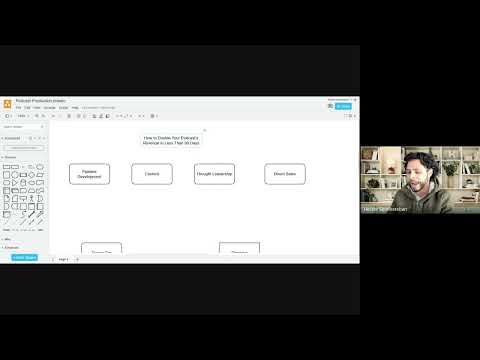
 86:50
VIDEO · Podcast strategy
VIDEO · Podcast strategy
Want to be more top of mind with your prospects? Here's a proven system that requires only 1-2 hours of work per week.
The YouTube player loads only when you press play. Prefer YouTube? Watch there ↗
Want to be more top of mind with your prospects? Here's a proven system that requires only 1-2 hours of work per week.
One, two, three. All right. Yo, welcome to today's stream. We are going to um kick this off and uh we're going to just make sure that everybody's here and that everything is up and ready and loaded. So, if you are Whoa. If you are here, thank you guys for uh for being here and um I appreciate it. My name is Hector
Santi Stebon. I have been producing, launching and editing podcasts for much of the last decade and my goal today is to help you to be able to uh stay top of mind with your with your audience, with your with your prospects. And so we are going to cover Wow. I hope that you were able to hear
that whole thing. Um, if not, that's okay. We'll we'll keep rolling as we uh we can. So again, I just wanted to um check in and I'll I'll resay it again for the uh for the recording. My name is Hector Santia Steon and I've spent much of the last decade here on this earth trying to figure out how to start, launch, and grow not only a successful but also a profitable podcast. I have
dedicated much of the last uh decade to trying to figure that out. Um, we've produced over probably close to 1500 episodes. We've done millions of downloads. And I think what I'm most proud of though is that we have generated hundreds of thousands of dollars, potentially even millions of dollars in revenue for the businesses that we are doing uh these shows for.
And I think that that's probably what is uh what is most important. And so, let's just hop in and uh and talk about why this is so valuable. And as I was thinking about the topics for today, yes, am I biased? Yes, do I uh hope that one day you work with us to start and launch a podcast of your own? Um,
absolutely. And also, I've realized that whether you utilize a podcast or whether you utilize some other method, which we'll talk about today, what those are, what that other method is, it's important for you to be top of mind. It's important for you to be in front of your audience. there is hundreds of
thousands of of pieces of content of posts uh that are constantly flying past your prospects. Right? If we think about what a prospect's day looks like, they are scrolling through hundreds or thousands of posts. They are flipping through maybe dozens of videos or Tik Toks or Instagram reels and they are probably listening to a a a piece of content, some sort of media. And so
that's a that's a lot of things that people are consuming. And also what's great is that it gives you a lot of opportunities to be able to to get in there. And I think another thing that's probably worth talking about right now is that there's really been this sort of democratization of content. I I remember
back in um actually I did my very first live stream back in 2015, right? About 10 years ago, maybe 2016, right around almost a decade ago. And I remember that it was this uh it was really this opportunity to like to start talking and then what was fantastic is that like people would listen and maybe there's someone on the other side watching this right now but it was the first time in in in sort of the the world of business where you didn't have to pay for distribution you didn't have to pay for advertising you didn't have to pay for marketing I remember uh when I you know first started my my very first business was a was a sales and recruiting business and of ways that we would market our services is we would send out hundreds or excuse me thousands maybe even tens of thousands hundreds of thousands maybe mailers uh throughout the country right and my my recruiting operation was targeted towards a smaller
area and so even in in the city of Los Angeles I would still spend you know tens almost yeah over I think one year the last year I was there I spent close to $15,000 in mail right, that I had to pay in order for them to be able to get it in their mailbox. And then obviously that that was, you know, back in the day, that was 2013, 2014, um, before, you know, social media had really taken over. And that was what you
had to do in order to get in front of people. Now, did it work? Yes. Was it worth it? Was it profitable? Yes, probably. Um, it was one of our one of our best advertising methods and it was a very much a pay-to-play sort of situation. And so when I got into the world of content, when I got into the world of social media and I all of a sudden said, "Hey, if I just post, if I just put myself out there, if I just create in content, if I just publish, people will start to notice." And this really helped me when I was starting my online business because I had well, I didn't have a large budget. I didn't
have a large marketing budget. I didn't have a huge runway uh or resources or really any I needed to go out there and I needed to start making sales fast. And at the time, no one really knew who I was or what I did or any of the value that I might be able to provide. And so I just started talking. I just started
talking. And what was interesting is at the beginning, and even today, this is my first live stream in a while. At the beginning was hard. It was clunky. It was weird. It was um there was a lot of uh emotions, a lot of fear, a lot of who am I, a lot of a lot of those things which um which are difficult, right? They're they're
challenging and and I can't tell you how many times I would sit at the like sit in front of the camera back from that and we had to run it off of our phone. and we didn't have these sort of, you know, we couldn't do it off of our computer. And so I would stare at my phone for like the whole hour. I gave
myself an hour to be able to to record and stream and and prep. And then that whole hour would go by because I would just be staring at the camera. I would just be looking at it trying to psych myself up, right? But what was going through in my head was all of the imposttor syndrome, the who am I, what am I, like like all of these things to actually that that prevented me from feeling comfortable even hitting the record or the you know the live button.
And so I get all that and on the other side of that is an incredible opportunity that if you can get past that, if you can get over that that what do they think of me, how do I look, how do I sound, all of that sort of stuff. If you can get past that, on the other side of it is an opportunity for people to to notice you, to recognize you. And
uh I I I don't say this as a necessarily as a badge of honor and and that it is the only way to do it. And also I'm very um proud of the fact that I was able that I've built my business. We've done, you know, over our time probably close to a million dollars in revenue, you know, for sure coming up on that mark.
And all of that was done without advertising, right? And it was all done through through marketing, right? It was done through content marketing. And um and it's it's it's free, right? It just takes your time, it just takes your attention, it takes your energy, and it takes your consistency. And if you can
do that, and if you can do it consistently, what we've seen is after we start working with clients, people they have people coming up to them saying, "Hey, I see you everywhere. Like, I'm seeing you everywhere." um and they are top of mind with not only their network, their contacts, but eventually if you do this consistently enough, you become you eventually start to become top of mind with your entire market as uh as well. Um
so let's uh let's keep going, right? We um we've got some good stuff to cover today. So the first thing that we're going to talk about is our parking spot. And I find that a lot of people when they are getting into this when they are either thinking about starting a podcast or creating a newsletter or starting to get into content, they're like, "What do I say? What do I even talk about?" And
even if I know what to talk about, who am I to even talk be able like who am I to even feel worthy about talking about that, right? Or who am I for for someone to to listen to me, right? There's there's all these things that sort of bubble up in our head. And I've realized that if we can identify our parking
spot, we can figure out what our parking spot is in the ecosystem in the market, well, all of a sudden a lot of those questions, a lot of those concerns, a lot of the like all of those things start to go away. And I learned the parking spot from a concept from my one of my mentors, Jeff Hoffman. And he
wrote a book called Scale, and he talks about it in there. And what he talks about is that, you know, even in a crowded parking lot, right? Even in a crowded parking lot, everybody has their own spot. It's not like you go into a parking lot and you go, "Oh my goodness, there's already 30 cars here. There's
already 50 cars here." I mean, there might be a lot. It might be full. You might have to work hard to find the spot for you. And also, each car occupies its own spot. And because one person is in one spot, it doesn't mean that that takes away anything necessarily from someone who is in another spot. And so if we can start to
see that branding, that positioning is less about being the just best, right? It's not just about being the best, but it's about being the best for that client. It's about being the right person for that client. And in the world of social media, in the world of 2025, in the world of AI, and in the world where we are constantly, you know, bludgeoned with all of this content and marketing and offers and all these sorts of things, being able to find the person that is right for us, that we feel is right for us is what's going to make the client feel comfortable going to somebody or paying more to work with somebody in particular.
All right, I want to check in on the stream. how it's doing. Um, looks like my stream metrics say that we're doing okay. If you guys are catching this in any sort of capacity, you can hear me, let me know. But, uh, looks like we're okay. So, so let's keep rolling. So, we've got our uh, we've got our parking spot. Now,
the way that I've helped people identify what their parking spot is is through sort of a a triangulation. And I know that's like a really nerdy way of There's this intersection of three things that if you can find this intersection it is oftentimes completely unique to you and there are eight billion people in the world and all you know what's nice is that yes you are you are probably unique right I'm going to go out and say and say probably unique especially in three areas the first is your experience right well actually let's talk let's talk about your enthusiasm and I try and make these you know uh these like three here but enthusiasm experience and expertise So when we think about enthusiasm, this is just a really fun way of saying like what are you excited about? What are the
things that you are passionate about? This also uh plays into like the personality and your your vibe. Some people are, you know, very outgoing and energetic and fun and bubbly and some people are much more stern and slower and stoic and calculated and meticulous. And some people are a mix in between.
Some people are, you know, they're the the rabble rouser, right? They are sort of the uh the contrarian. Some people are the um you know, sort of the the the navigator, if you will, the facilitator. They're the ones that keep things on track, keep things guided. Um but figure out like what what it is that you like
what what you get excited about. And then also, I would encourage you to think about how do you get excited about those? Do you get really nerdy about it and get really detailed and get really into, you know, frameworks or facts or research? Do you get really into the the people and the stories behind it? Like
what do you get excited about? What do you get passionate about? That's going to be the thing that uh is going to resonate because if you're passionate about it even and you're excited about it, even if someone else isn't passionate or excited about it, your passion and excitement can be sort of this um this trigger, right? That can that can
inspire that interest in them, right? So they may not be as enthusiastic about that particular thing or seeing it in that particular way but because you bring that enthusiasm and you also bring that authenticity. It's really it goes hand in hand and and people gravitate towards that, right?
they they really do gravitate towards authenticity especially in a setting like today where there are um you know opportunities for people to spend 30 minutes, 45 minutes, an hour, two, three hours even with you um through your content. And so authenticity and your your being true to yourself is so important. I see a lot of people being
like fake um and and sometimes they can be fake in the way that they think that they are. Like a lot of times they're trying to do what what they think they're supposed to do or they're trying to act or sound or talk like they think they're supposed to act, sound or talk. And the challenge is
and and that may have worked for a long period of time, right? You know, prior to the social media age, prior to the internet age and like the podcasting sort of, you know, landscape, you sort of had to fit a box, right? It was like all of the news anchors, all of the late night hosts, all of the, you know, previous traditional legacy media characters, they all sort of fit like the similar type of box, right? They
were, you know, pretty conventional. They stayed toward the middle, right? They like like they had and that was because they had to create this vanilla appeal to everybody. The challenge with vanilla appeal is that like yeah vanilla is cool because people will like they'll take it and it's like fine okay you give me a few options and all right I'll take vanilla and also most people if they have their options right and they have their their ideal choice most people would not pick vanilla like like there are some people but even then they're like they want the the honeybee vanilla or they want some you know vanilla although though it may appeal or it may be you know acceptable in in sort of the widespread it is not it's not right for most people and when I say right like it's not it is not the thing for the individual and when we're talking about content today we're talking about podcasts we're talking
about media newsletters however it is that you're trying to reach out you're going to have to be willing to be different if so nothing else. They can know how you are different than your competitors, right? And so many people I see are afraid to differentiate themselves because in the past that was looked down upon in the past maybe that wasn't the best thing to do. And I'm not
telling you, you know, to go out there and, you know, get dreads or, you know, on your hair or have face tattoos or all these things that really um, you know, seem to like like people have big strong visceral first reactions to uh and also I would encourage you to to be yourself, be more of yourself, be more of your authentic self or the self that is authentic um in that sort of situation, right? I think that we can all be
authentic in sort of a professional environment and that may look different than authentic in a you know social maybe degenerate environment, right? Um so enthusiasm first thing but just like your personality how your character and I don't mean by like your integrity or your values. I mean like the character
that you play. Uh one of the other things that we talk about with our clients is is is understanding acknowledging being aware of that character and then even embodying it. Right? If you think about a lot of uh famous shows, sitcoms or even like the you know you could you could extend it to boy bands or you know, TV shows, things like that.
There is different characters and all of those different characters have unique personalities and people gravitate and identify and relate more with one over the other. And so by creating this sort of by kind of veering off of the middle, you actually stand out and you actually align yourself more. Um, and so that's
that's just a huge thing to take in consideration. All right, let me hop back in here and just acknowledge the the live streamers for a second. Um, I appreciate you guys being here. If you guys don't know who I am and you somehow ended up here, my name is Hector Santi Stebon and for much of the last decade, I have been helping business owners launch and start um, profitable podcasts. And um, today's
topic is all about helping you stay top of mind with your audience. Um, all right. Let's hop back in. Looks like the the stream isn't doing okay. We have issues or you can't hear me, please let me know. All right. So, the next thing that we're going to talk about here is your experience. And this is when we talk
about what do we what do we talk about here? What do what are we what is our platform? Why are people listening to us? your experience is so valuable and I don't think that your experience can be overstated. Now when I say experience I mean things like uh in specific industries with specific clients like these are the things that you actually have done. I don't mean just like you
know oh you worked here for you know a certain amount of time and then you did this job for yes that's a part of it but it's like what stories what skills um and and less so those skills but what what stories what wisdom what insight what do you now know based off of living through all those things based off of going through all those things that now you go okay I've lived through that I've made those mistakes I've had those successes and now I'm going to I'm going to do it this way because of this like that that is experience. Uh it's one
thing to learn something in a book. It's one thing to you know have uh you know get cursory knowledge on on on stuff or or even have facts or even have like this intellectual knowledge. Very valid, very helpful and also that is not yet quite experienced because you haven't been forced to do anything with it.
Right? I could tell you how to host a podcast. I could tell you what it's going to be like to to run your first interview or to do your first episode or your first live stream. I could I could do all I could tell you all those things, but it's only when you actually experience them then that do you know what to do, right? Similar to driving a
car can tell you how to drive a car, but until it doesn't actually matter until you know what to do when to do it, right? which I think is the real root of experience or the real value of experience is that now you're able to make uh you're able to to assess situations and then based on your wisdom and your insight make the right decision moving forward and that often comes because you've had multiple experiences right and so that can't be short changed the next thing is the is expertise and I realize that I've we've been belaboring for a little bit and so um trying to go through a little faster.
Uh, but expertise is is another thing to not discount or your expertise is another thing to really highlight in your content. And again, people have different skills. And I would encourage you to to really get as nerdy and as niche with your expertise as you can. And what I mean by that is can you think
about the skill like right if you want to do if you're like a video editor video editing is great but can you video edit it for certain clients or certain types of projects or you're really good at certain types of things you know for a very long time and and I don't know that it's the exact same now but visual effects artists could like get away with with being like a one trick pony sort of right they were the person or the team or the agency to do like fire and they just they nailed fire and that was like that was their expertise. So they talked about it and I
have I have made the mistake in the past of going very wide with my my expertise and and both with what I've been what I'm learning and then also what I you know what I share. Um and I don't know that that was the right decision. And what I mean by that, it was like, okay, when I
got into internet marketing, it was like, all right, I need to learn how to do websites, and I need to learn how to make funnels, and I need to learn how to do ads, and I need to learn how to do, you know, branding, and I need to learn how to do um, you know, follow-up sequences, and I need to learn how to do social media marketing, and I need to learn how to do live. And there was like
all of these things, which, you know, I know how to do them now. And I think that I made it work because it came together um eventually into some sort of cohesive package. And also looking back on it, I probably could have gotten much further much faster if I would have really dove deep into one of those skills instead of hopping around trying to learn, you know, all these different ones. And so now that's
really been my focus is getting as narrow and and getting as great at, you know, we do podcasts, right? But all the other stuff around it, staying top of mind content, like like really nailing podcasts and really knowing all the ins and outs about podcast and and I'm I'm grateful that that's sort of that's that's happened. And also I know that I
need to continue to get better within the podcasting realm. And so is becoming a big thing. Streaming, what's that? You know, how do we monetize? All these things that you you continue to um you continue to to hone and develop your your skills. That's what you want to be talking about. It's the it's the
combination of your enthusiasm, what you're you're excited about, your experience, what you've done, and your expertise, your skills that you have right now. Those three things are oftent times unique. I mean, unless you don't have very much of any of those, right? Um, which I guess is is a
is is perhaps the the case, but if you're watching this, chances are you're pretty enthusiastic or you're excited about something. Chances are you have some sort of experience that you've been doing something and that you've acquired some sort of expertise or skill set and now it's about applying it. It's about
sharing it. Um, and uh, and so those are the three. One other thing that's probably helpful to talk about in this in this section is the um like what to do if you are just starting out or what if you feel like man you don't have a ton of experience and you don't have a ton of expertise but you have a ton of enthusiasm about a particular subject or topic or niche what do you do then can you still get started yes absolutely and there's two methods to it the first uh was popularized by you know Gary Vee called document don't I think that's fantastic. That's great.
Um, if you can do that, works for some people and basically they, you know, they build in public. They document what they're doing. Here's what I'm doing today. Here's how it's going. I don't know what what's going on with it, but here's here's how here's how it's happening. Here's here's the things that
are playing out. That's great. Uh, because it gives people sort of an overshoulder over-the-shoulder look and they're able to follow along with someone who is not at the top of the mountain. they're able to follow along and sort of be side by side as they climb this mountain. They
can sort of do that with you and that's fantastic, right? Um requires a a ton of humility to be able to say, "Hey, I'm I don't know what I'm doing. I'm just doing this. I want to share it with you because I think that the sharing of it will be cool and and we can share in this experience together." But there is a ton of humility that's required because a lot of times they're sharing failures, they're sharing doubts, they're they're sharing things that don't work and and that's not always easy on that's not always easy to do on on social media. So, um
documenting is is definitely one option. The second option, which I favor more, and this is just because it's, you know, different strokes for different folks, but I favor more of the the journalist or the investigator role. And whenever I came into a new niche or whenever I came
into a new industry, naturally I'm curious. And so this worked for me. But I just hopped in and just started talking and asking questions from all the people who were the most successful at it. When I first started getting into like the personal development and business days, I just started interviewing people. And I got a chance
to interview people like Robert Kiyosaki and, you know, um he's probably the biggest one, but there are a bunch of other great authors and and thought leaders that um you know, got kind of got me into the to the space, right? When I got into um you know into the different niches and industries that we were in for our podcasting company, same thing. When I
when I started like podcasting as our services, I once again didn't come in saying like, hey, I have all the answers. It was like, hey, I'm going to go talk to as many people who are doing well and I'm going to try and find all the answers. And what was great about it is because I was naturally curious because that was sort of who I was. I
was trying to get the answers all on my own. It was just great that we were able to record it and then publish it by association. There's something that happens, right, where like, you know, they see you next to someone, you know, who's doing well and all of a sudden there's that that that uh that association sort of thing. And if you do
that enough times, hopefully you will actually get the answers, right? Hopefully, you'll be paying attention, you'll be listening, you'll be taking notes, and you'll be implementing and integrating it into into your life or your business. Uh but if nothing else, at least they will see
that you have been talking to all of these really smarter, successful people and they will um at least associate you with their expertise, skill set, knowledge and such, right? Uh I would encourage you to actually, you know, be authentic and real and also just talking to the people, just like being in the same room. There's something that happens
when someone sees you in a picture or a video or something alongside someone else. um all of a sudden their their their idea of who you are and the value that you can provide uh just changes simply by the people that you are talking to. So that's another really I think uh helpful
strategy for when someone's getting started and they don't feel like man I I don't know if I have all the answers to come in and just say you know here's what to do. Um, you can also get the answers, find, you know, ask the questions that people want to know. Okay. Now, once you've figured that out,
right, hopefully what we've kind of done over the first, geez, it took us 28 minutes to get there, but hopefully what we've done is we've established why is someone going to listen to you? Why are you worth listening to? And uh, hopefully I've I've sort of convinced you that you have something towards saying. The next thing Where do we
actually say it? Where do we actually go out and put that stuff? And so on here I have uh platforms. Now I I could have called it a social media channel. I could have called it, you know, a list. There's a number of different things that I could have called it, but I thought calling it a platform was really important. Uh first because you can see
here I've got my three Ps here. So I love my alliteration. And also I think that just thinking about it as social media or just thinking about it like a podcast or just thinking about it you know in sort of this u simplified form is really damaging to to a lot of people. when I was coming up uh one of
the first books that I read when I got into internet marketing was uh called platform by Michael and one of the reasons I like this word but one of the things that he talked about was that a platform um you know sort of these things when we think about like influencers or we think about um yeah you know influencers these days it seems like it's sort of a new phenomenon and influencers have been around you know forever before it was you you know, social media influencers, it was pop and music influencers and movies and television influencers. And before that,
you know, it was um there was poets and there was, you know, it was theater and it was like it was all these there's for forever people have been creating these platforms to share their message to tell their stories and back in the old days right they you know when I think about I think of like you know al times or even revolutionary civil war times for sure before you know pre pre- internet pre-ele electricity uh pre microphones when people what they would do is they would literally stand up like on a on a platform they'd like stand on a box or like a stump and then they would just yell at people right I mean they more than yelling that's essentially what they were doing is they would just stand on this thing and start talking to people and what would happen is that as they started to talk started to gather people started they come in, they started to to attract their audience. They started to attract
the people that were resonating with what they were saying. And so that is really what a platform is. Is a platform is is a a place where people can start to come together, right, to hear you, to uh listen to you, to learn from you. And then ultimately what's nice about this is that if you do it the right way, those people start talking to each other, engaging with each other, communicating with each other and now you've got a community. Now you go from
a platform to a community and you go from platform to a community and there's so much more opportunity opens up from that, right? Because now it's not just a onetoone sort of thing, but you have a one to many and you have a many to many sort of effect that's going on as well. And so I think that it's really
important to to think about, okay, if that's if that's our business, how are we bringing people, how are we bringing prospects to our um to our business, right? How are we bringing them to our platform so that we can move them down the funnel, move them down the pipeline, whatever it is that we're looking to do in order to turn them into a happy client.
So when it comes to platforms, I think there's a couple of to think about, right? I wrote down owned, borrowed, and paid. And I think that this is uh we're going to put paid up here just we're not going to talk about it as much, but owned and borrowed are things that um have been around marketing media for forever. Really, the challenge was is
that own media just used to be really expensive and own media used to be really hard to to to create, right? used to have there was a lot of gatekeepers. It was, you know, own media used to be the CNN's, the New York Times, the the the newspaper, right? That was the own media. And in order to start a
newspaper, in order to start uh you know, a CNN, uh you these sort of things required a lot of capital, required a lot of investment, a lot of time, and uh and there also weren't these sort of builtin distribution uh platforms and networks that allowed people to see it. And so what did they do? They looked to
tomorrow, right? They look to get um featured on different segments, you know, or I remember growing up getting on like a like a a news show was like I mean you were like a celebrity, right? Like if you could get on a news show, you can get on the morning news and talk about you know your business or something like that.
That would be a really that would be a really effective way to drive clients, right? To drive marketing, drive your audience. Uh the challenge is though is that once you went on their show, you didn't have anything, you know, it was theirs, right? You were essentially using their platform, using
their audience to sell your stuff. And today, essentially, that is the the same thing that's happening with social media. And so borrowed media, these are like social media channels, right? Social media. You've got Instagram, Facebook, Tik Tok, even YouTube, Spotify, right? All of
these, all of these borrowed platforms. And these are great, right? delete social media because we put Instagram, Facebook, Tik Tok, you know, put LinkedIn, Instagram, right? All those things are fantastic. And also, if one day LinkedIn or Instagram or whoever it is decided that all that they didn't like what you were saying or they had an error, administrative error or something happened to your account or your page or who knows, the list can go on and on.
But if that happens, well, you're on their you're on their land, right? You're you're essentially sharing on their on their land. And so, of course, you can utilize it while you have it. But if you don't actually have any owned media, then when you're you're essentially at the whims of you're you're essentially at the whims of all these platforms. And so what we suggest
is kind of doing a little bit of both, right? So borrowed media is great and it's there. And what's awesome is that it's free. Own media is yours and you can take it and you can keep it. You can do sort of not whatever you like with it, but uh you have much more ability to do what you like with it. And own media. These
are things like podcast. These are things like an email newsletter. I might venture to say that that's probably that's like it right now, right? In terms of owned media. And what's nice about podcast is that you have an RSS feed. And so that RSS feed um you know is even if even if Apple or Spotify decided one day they don't like your show, well you are still on an RSS feed and so they can your your listeners can go out there and grab it from wherever. Um and so that is another
great thing and another reason why have kind of become this really it started out with with the influencer, right? This bastion of influence, but then also it's this great place for businesses to create sort of this archive of of value, right? And especially over time, it's something
that can compound over it. So, I might put over here um a blog, right? If you've got a blog like a website blog, but also on media, all of these really start to be um places that you can build over the long term and they may not prove immediately fruitful. They may not turn into, you know, they may not have the
audience or the built-in audience that something like an Instagram or a Facebook or Tik Tok presents you with. And also once you develop this, you have a much more intimate relationship with them. You have a much more close connection and obviously a direct connection to them that isn't um isn't hindered by anybody. I was just
thinking about like LinkedIn and some of the posts that uh that I post recently. And it's just interesting to note that certain content with certain words does better than other content with other words. And so it's like you're playing you're playing a slot machine game all the time over here with borrowed media.
And when you can start to develop this audience of people who are coming and looking for your stuff on a regular basis, well now you're not subject to the winds of an Instagram ban or a Tik Tok whatever because you have the you have the platform and you own it. All right. Um, I'm gonna check in on the
stream here, see how we're doing. Hopefully, uh, you guys can still hear me. Um, I'm going to create a poll and I'm going to say, can you hear me? If you guys could let me know, that would be great because I have done entire live streams without any audio. So, uh, it happens. All right, looks like we're all good.
Let's uh let's hop into our last topic here. Oh, we have two more topics. Maybe we'll save the processes one for last uh or for another day. So, let's talk about pillar content here now. Okay, we've established what we're going to say. We have figured out where we're going to say it. Okay. How do we do it in a way
that is actually sustainable, right? How do we do it in a way that actually creates traction, right? That doesn't feel like it's this this like I'm just spinning my wheels because that can also be another thing that happens a lot with content creators is that you can put out a lot of activity and you can do a lot of things, but unless it is sort of organized, it's cohesive, it's scalable, it builds on each other, and it's going to be um it's going to be very hard to to continue doing it uh for for a prolonged period of time. Creating content is excuse me
creating content can be a grind just because of the nature of it. And so obviously, you know, VAS and obviously editors and having someone that can help and support with the actual editing and the videos and all that stuff is super valuable and super helpful. And also, if you don't have the right systems and
you don't have the right sort of uh let's call it architecture, then you could be putting out tons of content, which does actually get you top of mind. But if it's not done the right way, that's all that it is is just awareness and it doesn't actually turn into sales and it doesn't actually turn into business. And so some of these other
parts of it, right, and specifically some of the parts of the processes really make sure that you turn that into into real business. So what are the types of content that are worth creating today? There's really two of them. Uh the first is a newsletter which might be like akin to
like a blog you know uh and the second is a podcast. Those are the really the two the two options right and I put in here where does that come from? You can either write or you can create video. Those are the two. It used to be that you can create audio. Challenge with that is there's too many video platforms and there's too many people who are doing video and so you it it would just benefit your business for them to see your your base, right? and and for them
to be able to create that connection and that relationship even if it's one-sided uh with you, with your face, with your tone, like like being able to see you helps with the sales process. Uh helps with that trust, helps with that authenticity. And so I I would encourage you that if you're going to do a podcast, you should probably do it video if you're trying to um do it for your business, right? If it's just a a hobby
or passion project, like I don't that's not really what we're talking about. Um but if you're creating a podcast for your business. I would definitely recommend making sure that you include video. But some people, they don't like to do that. They don't like to record. They don't like to be on camera. They
don't like any of that. Uh that's fine. Those people are usually much better writers. Those usually those people are usually able to to put their thoughts and their ideas into some sort of cohesive cohesive something that people can read. Now, you'll notice here I've been ranting and rambling for 42 minutes. I
is like if I tried to put whatever I that came out of my head into some sort of into something that someone could read and not get to the end of it and be like what the heck was that? Um that's I can't I can't do that. So that's why I come here and I talk it out and even I've got these things to keep me on track. And even after that, you
know, part of what we'll talk about on the last one or the next step is like the processing. Even after that, I'll take this, I'll go through, chop up pieces of it, find the best clips, rewrite some of the stuff, turn those into text. So, what's nice about being able to verbally process and verbally articulate a lot of these things is that you can now take that with AI and then you can mix and chop and cut and create all of these sorts of things right from that from that transcript.
So, these are the two that I I would really encourage you to uh to pursue. Um, knowing that when we call them pillar content, they're called that because you can break off splinters and that's what becomes your LinkedIn posts. That's what becomes your your substack post. That's what like you take these
this large piece of content and then you can break it down into smaller pieces and bits and pieces because what we've found is that people are going to listen to your show whether or or watch your show or read your your newsletter, your article. And also more people are going to catch and consume the splintered pieces of content even if they don't consume at the depth to which they might get it from a full episode or reading the full blog. Once again, what are we
we're optimizing for? Top of mind, right? We're optimizing for top of mind. And so, yes, writing that one long great piece for the blog is huge. Yes, creating that that podcast for, you know, the episode for your podcast is great. And what's going to get it seen by most the most amount of people is taking it, chopping it up, repurposing it. YouTube shorts, Tik Toks, right?
Like, you guys know the system. Um, you guys have seen it. It's just a matter of It's a matter of do you have the right processes that allow it to be sustainable? And I got to tell you, I have a full team that is devoted to this. And it's still like, man, I I feel like I need to I need to constantly improve our systems like we need to constantly improve our processes to make things to make things easier.
So a couple of things uh when it comes to making this simple two two concepts that I think are helpful are to either batch record or interval record. And I found that different people it works for different you know different strategies work for different people. Batch recording is where you take, you
know, once a month you take half a day, a full day, whatever you need to do, and you sit down and you bang out as many episodes, as much content, as much writing, as much recording as you can in that half day or that one day. And so if you can take that half day uh and you could turn that into, you know, half day, four hours. So if you can turn that
into four four episodes right now you've got a full months of content recorded at least you got a team or something like that to do the editing obviously then it's it's sort of done from there but now you've got these batch recordings so over the next month you don't necessarily have to keep recording again in order to have have stuff to put out. So a lot of
people like to do this. We've even done it where we've done like a, you know, a whole a whole day and we try and get eight to 10, you know, 12 even episodes or even over a two-day sort of shoot because now we've got a full core. We got three months of content and we can really focus on the editing. We can
focus on the the scheduling part. So, we don't we don't really have to worry about recording again um you know, for a while. That works for some people uh and also some people energetically like that does not work for me. Um, it can, but I would much rather do what I call interval recording, which is I just have a standing time that I'm available to record or that I will record, you know, every week. And some people, they have a
specific day and time where Tuesdays at 12:00 p.m., Tuesdays at 3 p.m. That's their recording time. And so if you're going to come on as a guest, you pick, you know, Tuesday the the 16th or the 23rd or the 30th or like you just pick any of the and you know, you as a host, you know that on Tuesdays, this is my recording day. Um,
I like that for people who are busy, people who have a lot of meetings, people who don't necessarily have the luxury to be able to take a full day to just devote to content. If you can create uh, you know, these interval schedule and you can have just a standing meeting every single on the calendar, you will be so amazed at how much or excuse me, you'll be amazed at how it compounds over time, right? Um, and how
much content you can create to where you better have these next part, you know, these this next part of the of the system because if you do this the right way and you interval or you batch record the right way, you'll have a ton of content, right? And I've made the mistake where we've recorded a ton
of content but we didn't process it in time and so then all of that content was just it was stuck right uh good problem to have I guess and also um we needed to figure out how we work the content through and actually get the most out of it and so the process and the publishing part um is huge right when we talk about process I don't just mean yes the editing uh but also taking that and repurposing right Repurposing is such a a a huge part of the processing part because you want to you want to get the most squeeze out of that episode. And the way that you're
going to do that is by taking going back to that pillar concept and by creating splinter pieces of content that are you don't have to rethink. It's just more repackaging and then publishing. And this is sort of different for each platform. It's different for uh different content types. Um but having
some regularity for your publishing once a week, once a month, once a day, whatever it is, making sure that that's there. And then that's simple. The part that I think is not paid enough attention to is this followup because I used to think that if I just put out content, great, people would come to me. And that does happen
sometimes. uh especially if your content is great and consistent and all that sort of stuff. What tends to be more effective is if when I put out a piece of content, it's usually like a it's like an invitation, right? It's like this this thing that goes out to somebody and says, "Hey, if you if you like this um you're probably someone that might benefit from West Working, right?" or some, you know, something to that regard where the people who engage, I know that if I reach out to them and I'm not going to just try and sell them right away, right? You can make this follow-up
process as human and also as automated as possible or as you'd like. It's something as simple as if they like your post, hey so and so, thanks so much for, you know, engaging. Um, please let me know if you ever need help with expertise, right? Could be as simple as that. And it's not, once again, it's not
going to happen overnight or you're not going to maybe maybe that turns into something right away. But if today you post and you get 10 people, you know, to engage, like, comment, whatever it is, and you just reach out and you follow up and create, you know, DM conversation with them out of those 10 today and then 10 tomorrow. And let's
say, you know, let's be conservative and say you average five um for every post, you know, throughout the week. you've got 25 people that have engaged on your post. Not a not a huge like record-breaking door, you know, shattering sort of number. And also, you follow up with those 25 people this week
and then you do it again next week and you do it again the third week and you do it again. By the end of the month, there's a hundred people that you've just brought in warm leads into your ecosystem. And I would imagine that uh the more defined that follow process is, the better. But out of those hundred,
some of them are going to start to turn into business. And so this follow-up process is so critical to gathering and capturing those those people who are interested that have seen you that you were top of mind with and then actually creating a conversation with them. And and again, you don't have to be salesy.
Uh I always love going in with value first. So you know, hey so and so here's a we just created this free resource. If you want it, here it is. Thought you would love it. that sort of thing. And so, uh, that's and I'm running out of gas here because I'm at about just over 50 minutes. So, thank
you for anybody who has made it this thus far even on the replay. And, um, if you want our entire playbook for launching a podcast, it has something like uh, 25 steps um, bunch of different assets that you need along with all of the, uh, steps that you need. each individual episode, we put it
together in a nice notion template that you can get for free. So, if you want that, just leave a comment here and I'll follow up and send you that as well. If you have any questions about anything that I've talked about today, feel free to uh let me know, leave those in the comments or you can reach out and send me a message. But, uh again, my
name is Hector Santi Steon. Spent most of the last decade trying to figure out how to produce profitable And I'm just so excited that a chance to to interact and uh co-create this future together. So have a wonderful amazing rest of the day and see you later.
86:50
VIDEO · Podcast strategy
 5:35
VIDEO · Podcast strategy
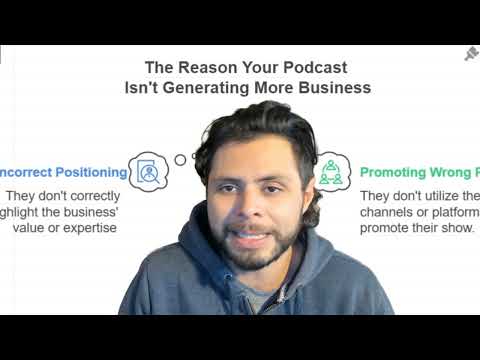
Are you spending time and money on your podcast but not seeing any real return for your business? You're not alone. Get a free podcasting profitability session at https://amplafymedia.com/profit In this video, I break…
Let’s chat about utilizing content to increase your visibility and strengthen your industry connections.